
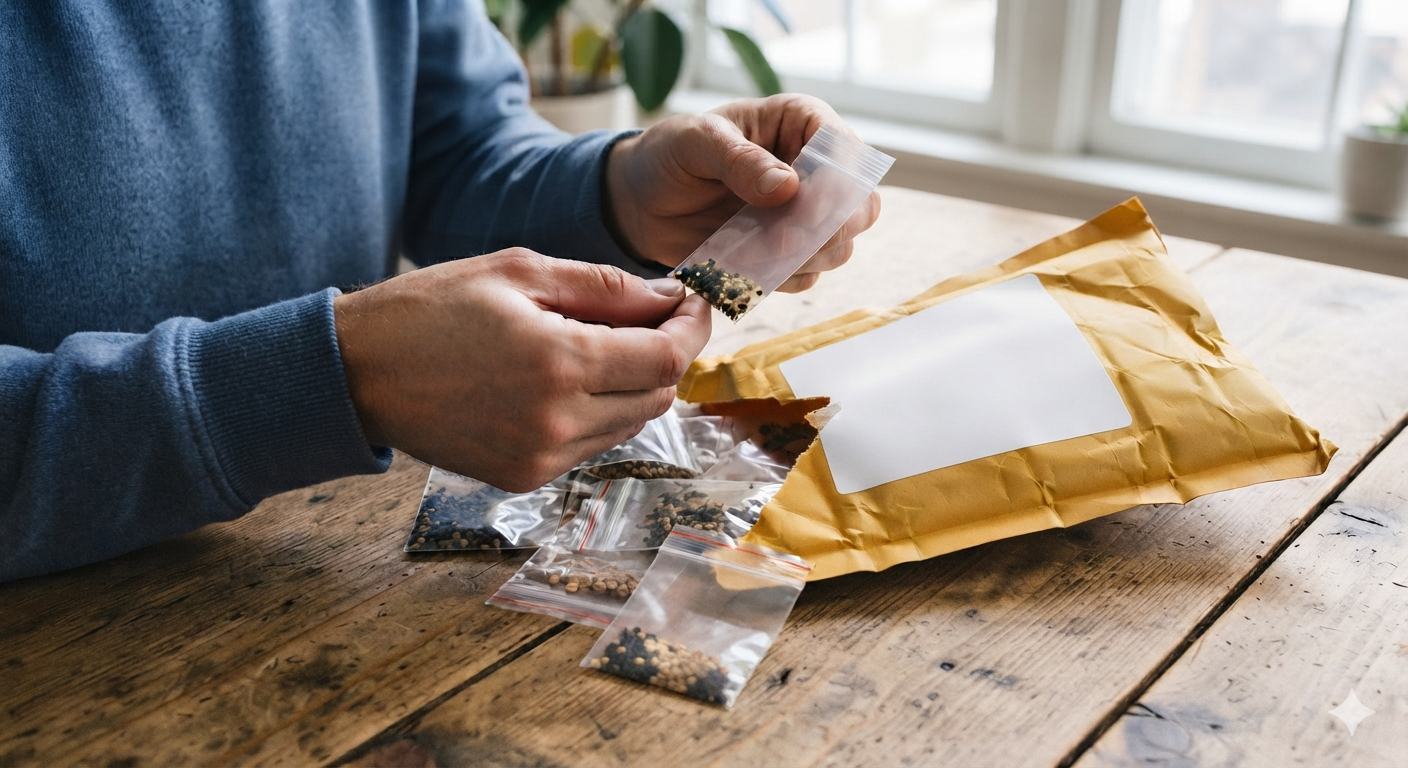
Peppergate was a massive seed mixup in 2023 that hit gardeners across North America. Millions of backyard growers and small farmers bought seed packets labeled as jalapenos, serranos, or poblanos. When harvest time came, their plants grew banana peppers, yellow wax chiles, or sweet bells instead. The mixup happened because large seed brokers bought seeds from open farm fields. They mixed different seed batches together in big warehouses.
Many gardeners think seed mixups are just rare packing mistakes. In reality, Peppergate showed a deep crack in the global seed trade. Most retail seed brands do not grow their own seeds. They buy seeds from overseas brokers who focus on cheap labor and high volume. When farms grow different peppers side by side without netting, bees cross-pollinate the flowers. Those mixed seeds end up in retail packets on store shelves. Real farm testing proves that keeping seeds pure requires physical insect screens, careful field rogueing, and complete single-origin isolation from day one.
Early Warning Signs: How Gardeners Spotted Trouble in Spring
The first signs of trouble showed up in March 2023. Gardeners who started seeds indoors began posting photos online. Many called local extension offices. Their young pepper seedlings did not look right for the varieties on the packet labels:
- Unusual Leaf Shapes and Colors: Seedlings marked as dark green, thick-stemmed Serrano peppers (*Capsicum annuum*) grew pale green, floppy leaves. They looked like sweet banana peppers.
- Wrong Flower Directions: Some plants grew flower buds pointing down instead of upright. This proved right away that the plants were the wrong pepper group.
- The Mid-Summer Harvest Surprise: In July and August, the truth came out. Gardeners spent five months watering and feeding their plants. When they walked into their garden beds, they found yellow wax peppers with no heat instead of hot jalapenos.
At first, people thought one seed company made a simple packing mistake. But within weeks, reports came in from almost every major seed brand. Gardeners bought seeds from farm supply shops, hardware stores, grocery racks, and online seed catalogs. Yet they all grew the same wrong yellow peppers. The problem was not one bad seed company. The problem was the shared wholesale broker pipeline behind them.
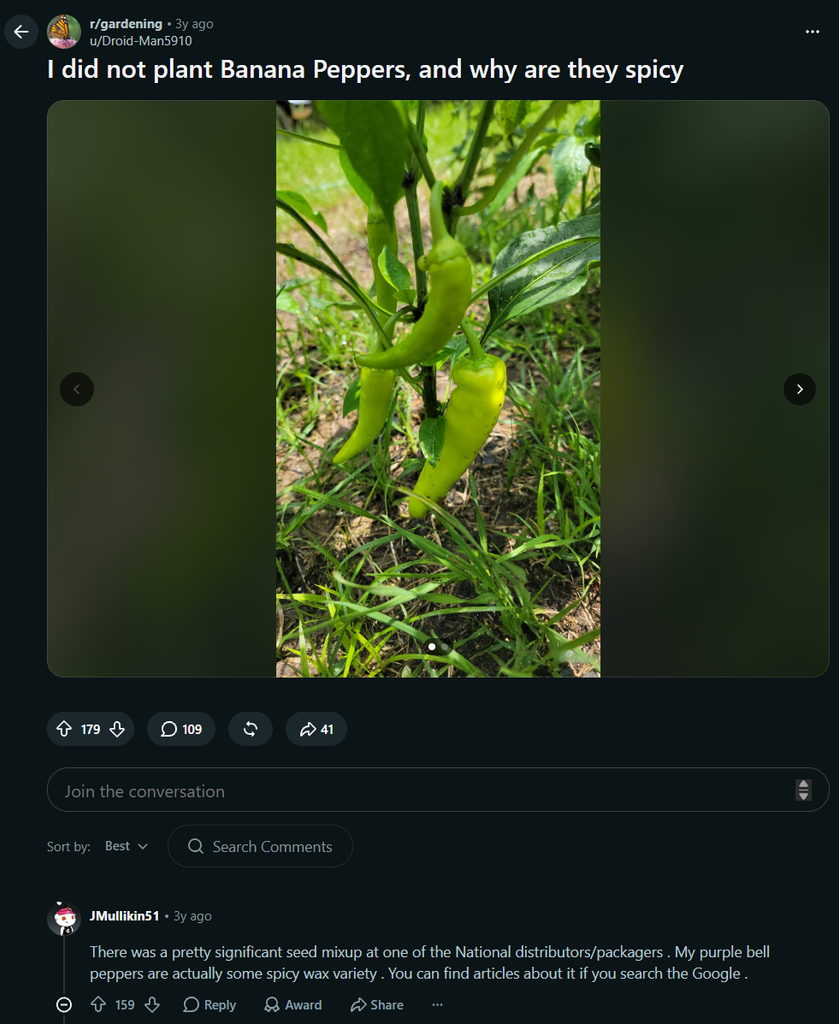
Summer 2023 on Reddit: How Backyard Gardeners Broke the Story
In July 2023, gardening subreddits like r/gardening, r/vegetablegardening, and r/HotPeppers filled with photos of strange harvests. Gardeners across the country realized their garden beds held the exact same mystery peppers. That online community search quickly coined the viral term “Peppergate.”
Inside the Commercial Seed Supply Chain: Where the System Broke
To understand how millions of seed packets went wrong, you have to look at how seeds travel from farm fields to retail stores. Most seed companies do not own farmland. They design colorful paper packets, buy seeds in bulk from wholesale brokers, and fill the envelopes using packaging machines.
| Production Step | Industrial Wholesale Broker Pipeline | Single-Origin Transparent Seed Farm |
|---|---|---|
| Farm Origin | Unknown contract farms scattered across several countries | Single dedicated farm location with clear coordinates |
| Pollination Defense | Open field spacing with no physical insect screens | Documented isolation method (such as mesh insect netting) |
| Crop Inspection | Machine harvesting without hand inspection | Daily field walks to remove any off-type plants |
| Batch Mixing | Leftover seeds from past years blended into new lots | 100% single harvest lot kept separate in its own batch |
| Buyer Proof | Generic printed stamp such as ‘Packed for 2026’ | Public Seed Lot Passport with live germination logbooks |
This industrial system broke down in three specific areas. Each step made the genetic mixup worse before the seeds ever reached a store shelf:
1. Open Field Farming Without Insect Netting
Wholesale brokers hire large contract farms where land and labor are cheap. Growers plant sweet bells, banana peppers, and hot jalapenos in side-by-side rows. These rows sit only 50 to 100 feet (15 to 30 meters) apart.
Honeybees and wild bumblebees fly hundreds of yards every single day. A single bee can visit dozens of open blooms in one flight. When a bee drinks nectar from a sweet wax pepper, its fuzzy body collects pollen grains. That bee then flies straight to a jalapeno bloom and drops that pollen onto the flower. Without physical insect netting cages, cross-pollination between varieties easily reaches 20% to 40%.
2. Skipping Field Rogueing
In quality plant breeding, “rogueing” means walking farm rows on foot every day. The grower looks at leaves, flower buds, and young pods. If a plant looks off-type or grows the wrong shape, the grower pulls it out by the roots and removes it from the field.
On large commercial contract farms, nobody walks the rows to pull out off-type plants. Instead, big combines cut down thousands of plants at once. A single row of off-type plants gets ground right into the main seed bin. That single harvest bin then fills hundreds of thousands of retail seed packets.
3. Blending Old Leftover Seed Bins
When bulk seed arrives, brokers test it for basic sprout rates. If an older batch tests low, workers blend it with newer seeds. This raises the sprout score just enough to pass legal rules.
If the older batch was mislabeled or crossed, the blend spoils the entire shipment. Thousands of envelopes end up filled with mystery seeds.
🔬 Myth vs. Agronomic Reality: The Seed Packet Guarantee
Retail Myth: “If a seed company prints a 100% satisfaction guarantee on the envelope, that means their seeds were field-tested for genetic purity.”
Agronomic Reality: Seed packet warranties only cover the cash price of the packet, usually $3.00 to $5.00. Seed laws require companies to test for basic sprout rates and weed seeds. But the law does not require grow-out trials. It does not require DNA tests to prove varietal purity. When your crop turns out wrong after six months, you bear the entire loss.
What Plant Science Proves About Pepper Crosses
Researchers at the New Mexico State University (NMSU) Chile Pepper Institute have studied how pepper flowers work for decades. A pepper blossom is a complete flower. It carries both male pollen sacs (anthers) and a female pollen receiver (the stigma) inside the same bloom.
Under calm conditions without bugs, a pepper flower pollinates itself. But the flower also makes sweet nectar that draws hungry bees. When a bee moves pollen from a banana pepper onto a jalapeno flower, cross-pollination happens right away.
Here is what tricks many gardeners: the current pod looks completely normal. The fruit wall (the pericarp) grows from the parent plant’s own tissue. The pod ripens into what looks like a classic jalapeno. But the seeds inside carry mixed hybrid genetics. When you sow those seeds the next spring, you get mystery plants. They grow with the wrong shape, poor flavor, and no heat.
The Real Cost for Backyard Growers and Small Market Farmers
For a casual backyard gardener, harvesting mild banana peppers instead of hot jalapenos is annoying. But for market growers, community homesteaders, and hot sauce makers, Peppergate caused real financial damage:
- Lost Restaurant and Market Contracts: Small farmers promised bushels of fresh hot serranos to local restaurants and farmers markets. When crates arrived full of yellow wax peppers, chefs sent them back. Farmers lost trusted wholesale accounts.
- Wasted Water, Soil, and Fertilizer: Growers paid for potting mix, drip lines, organic plant food, and hundreds of hours of hard work. They cared for crops that had zero market value.
- Ruined Home Canning Seasons: Families set aside weekends in late summer to can homemade salsa and pickled jalapenos. Instead, they had to put their canning jars away or buy expensive wholesale peppers at grocery stores.
- Accidental Seed Bank Contamination: Gardeners who saved seeds from their plants unknowingly saved unstable hybrid seeds. That ruined their personal seed collections for years to come.
⚠️ Common Pitfalls: The ‘Packed For’ Date Trick
Never assume a packet with this year’s date stamp holds fresh seeds. Federal rules require companies to print the sales year on the packet. But companies do not have to list the harvest year. Brokers can keep seeds in warehouse bins for three or four years. When they pack those old seeds into new envelopes, they simply stamp them with the current year.
The Single-Origin Farm Solution: How Real Traceability Fixes the Problem
Peppergate showed every gardener that buying seeds from anonymous broker networks is a gamble. The only way to guarantee pure pepper seeds is through single-origin farming, physical insect cages, and open records.
On a single-origin seed farm, growers raise crops with clear isolation records. Instead of guessing, growers use methods like mesh insect netting to block bees. Our Seed Lot Passport shows if or what isolation method was used for each batch. This gives you a clear idea of what to expect.
Because nobody else in the seed industry was offering this level of proof, we built our own solution. As far as we know, Pepper Explorer is the only seed company that publishes open batch records online. Through our Official Seed Traceability Registry, every seed packet we sell connects to an open Seed Lot Passport. Growers can check the exact harvest date, inspect unedited photos of the crop and its isolation method, and view weekly germination test logs from our climate-controlled chambers.
To learn how to read real germination curves and spot authentic seed batch data, check out our guide on how to read a seed lot passport. When you are ready to plant verified seeds raised with physical cage isolation, you can browse verified single-origin pepper seeds in our farm collection.
Frequently Asked Questions
What was Peppergate in 2023?
Peppergate was an industry-wide seed mixup where major seed brands sold mislabeled pepper seeds. Gardeners who thought they planted hot jalapenos or serranos ended up harvesting yellow wax peppers and sweet bells instead.
Can you tell if a pepper seed is wrong before planting it?
No. Seeds from different pepper varieties look almost identical. You cannot tell what variety a seed will grow into just by looking at it with your eyes. Only physical insect cages during flowering and verified batch lot tracking can ensure the seed grows true to type.
How do I avoid getting fake or mislabeled pepper seeds?
Buy seeds directly from single-origin seed farms that grow their own crops under insect netting cages. Look for seed packets that provide unique lot numbers and open germination logbooks rather than generic retail envelopes.
Protect Your Garden Season with Verified Seeds
Peppergate proved that anonymous seed supply chains put your garden at risk. By choosing single-origin seeds with documented isolation methods and open lot passports, you take back control of your harvest. Inspect our live Seed Lot Passports on the registry. Browse our verified single-origin seeds for your garden this season.